
I Was Wrong.
My gut was right.

Arrival
It was one of those rare silent nights on the west side of Ninth Avenue.
Frigid.
The kind of cold where you don’t even think about pulling your hands out of your pockets to change the song.
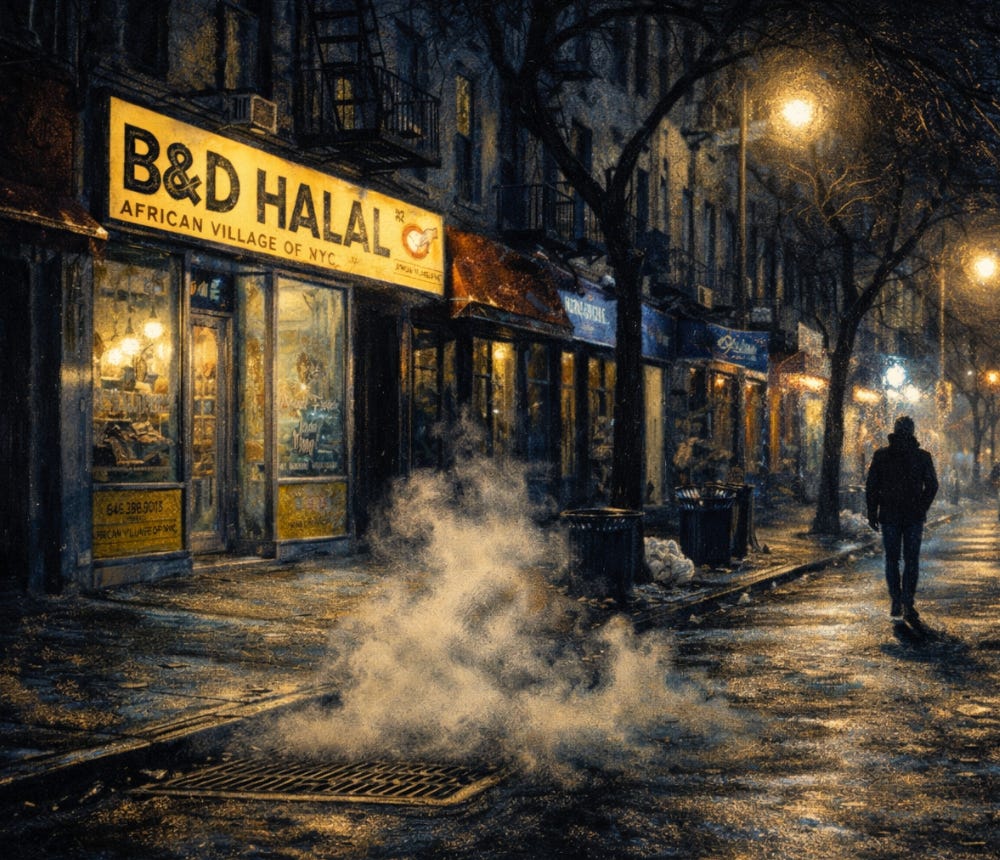
I noticed a new storefront sitting where another had closed just weeks before.
The sign read B&D Halal: African Village of NYC.
“Great, another tourist,” I muttered.
I figured it was another ghost kitchen — the kind of in-and-out operation that wants nothing to do with the neighborhood around it.
I was wrong.
On a warmer afternoon, I passed B&D again and smelled something unexpected: freshness.
That unmistakable smell of something made well. Something crafted with intention.
The primal hunter inside of me woke up. Pupils dilated, lungs full. My sixth sense pulled me in the direction of the source of that potent truth.

Sound dramatic? Well, when you consider the tragic state of American food and health, good stuff priced at a steal is worth a gasp in its own right.
I don’t care how numb your nose and taste buds are from processed junk — your body can sense what’s real when it comes to food.
Inside
B&D Halal is worth a better introduction. The Afro-Caribbean cafeteria is unlike most of the joints you’ll find anywhere in the city. The food is authentic to West Africa, yes. But I didn’t expect it to transport me there.
When you step inside, you’re warped back to all-you-can-eat Chinese buffets of ‘90s and ‘00s strip-mall fame, or summer camp mess halls, where you’d encounter 30-foot islands of piping hot grub anchored by huge aluminum spoons.
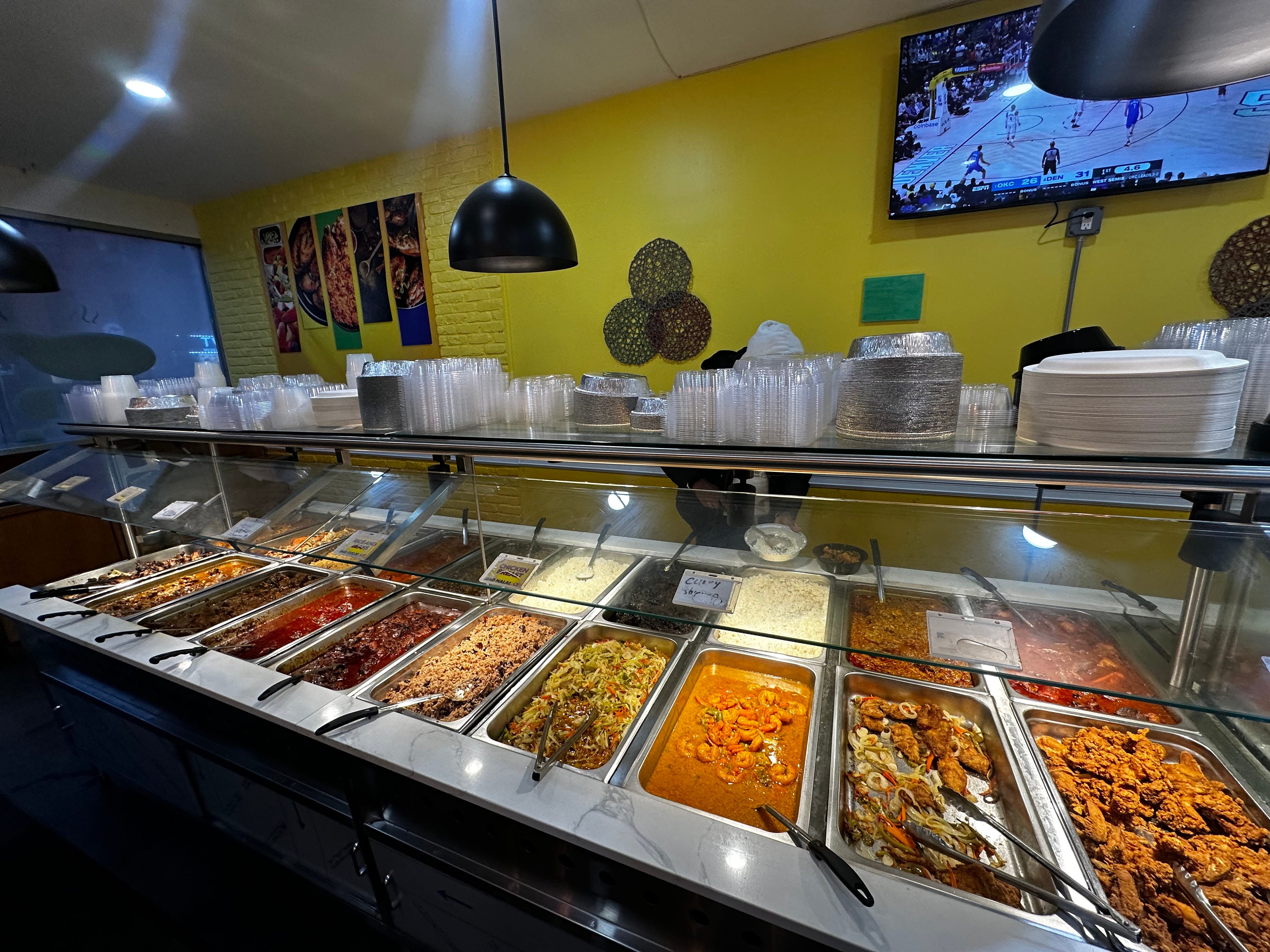
All about the open-air room of B&D are towering, slender delivery guys with deep complexions and marble-solid features putting together their lunch. Their body movements are slow as molasses. Jaws set wide and steady, burying subtle smiles that don’t fade.
Hailing predominantly from Nigeria, Ghana, Senegal, Guinea, Mali, and Burkina Faso, New York’s newest cardholders possess a radical, silent immunity to the twitchy-hustle of this strange Western city.
Surrender
The merry-go-round of plastic trays and help-yourself plates reminded me of my college days. College was the first time I had free choice with what to eat. At home, you simply ate what was prepared, no debates or dissent.
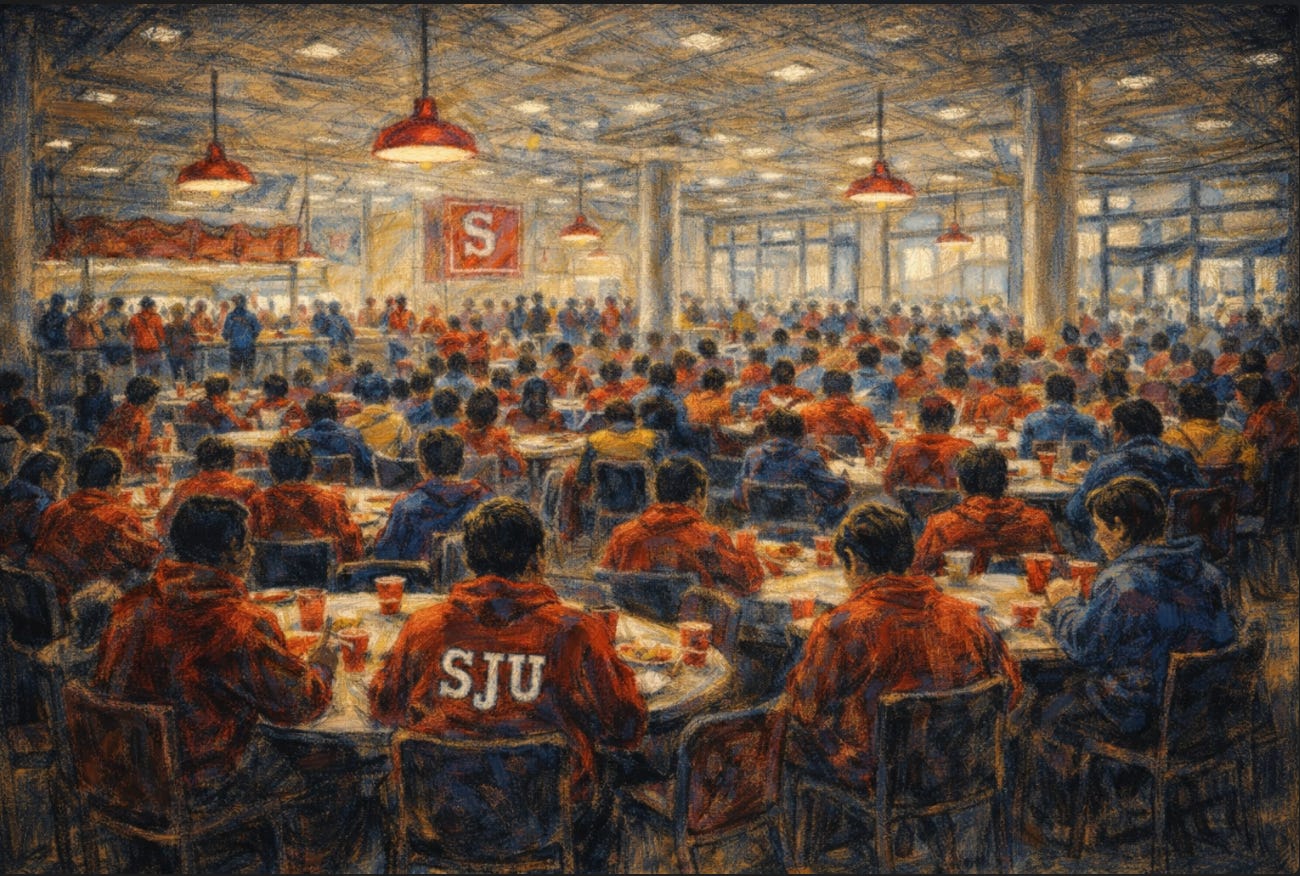
While others were practicing all-nighters, I was practicing the art of surrender in St. John’s dining hall. I’d hand the controls over to my gut, letting my instincts dictate the meal.
Dinner was democratized: I’d simply follow what felt right, and scoop.
Unlike eating with your eyes, (the gluttonous, scarcity-coded parts of us) eating with your gut leads you toward restoration.
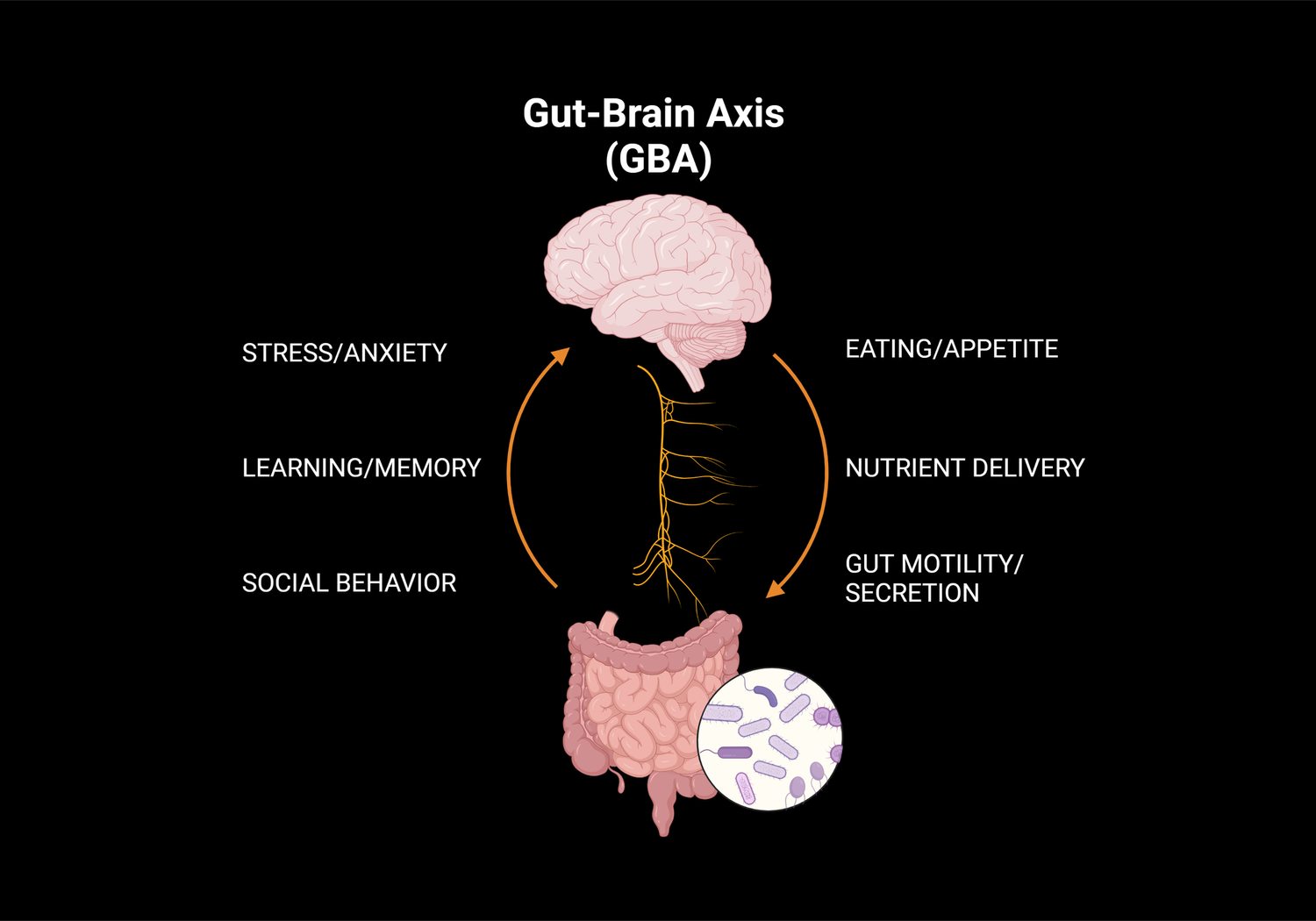
Your gut and brain are connected. These are some of the signals and functions they share.
Between custom salads, snack wraps, hibachi platters and breakfast omelettes, there was no shortage of health-forward eating options.
That’s if you were tame.
Even more abundant were the freshman-friendly staples: pizza, burgers, french fries, heaping bowls of pasta, and cookies baked fresh by the hour. Good luck convincing an 18-year-old to choose wisely.
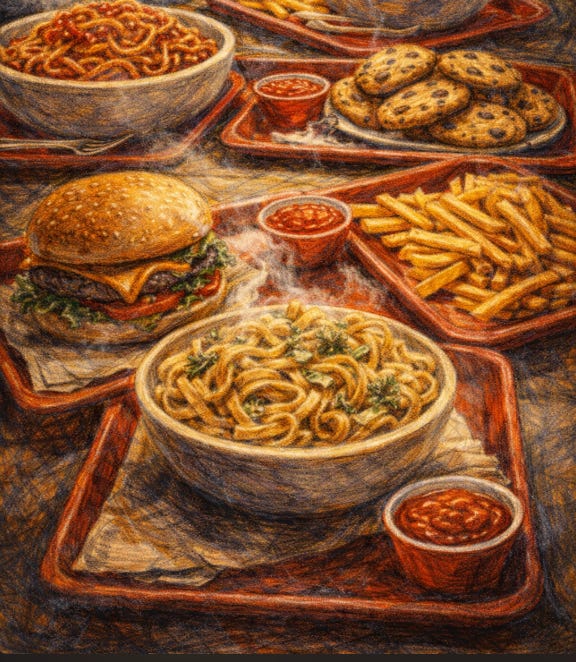
I was working out intensely around that time — sometimes twice a day — so I eventually learned that a daily ice cream sundae just isn’t worth the drawbacks.
My gut-brain connection eventually synergized, learning that fiber, protein, and slow-digesting carbs meant higher performance. Quicker recovery and better sleep ensued. Happy gut, happy mind.
But back to African food.
In B&D Halal, the challenge picked up. This wasn’t university anymore. I was in the midst of something foreign, somehow both familiar and ancient.
Ancestry
Drawing closer to the food, I was first stricken by the rich colors of every dish — we’re so used to seeing dull, almost two-dimensional foods these days.
There was a sense of reverence for the sheer amount of life — both beautiful and puzzling — curdling with steam in front of me.
Though I could barely recognize a single thing, I felt a deep, familiar connection, and knew that I must have eaten these meals thousands of times over in a past, distant life.
I stepped closer to read the labels.
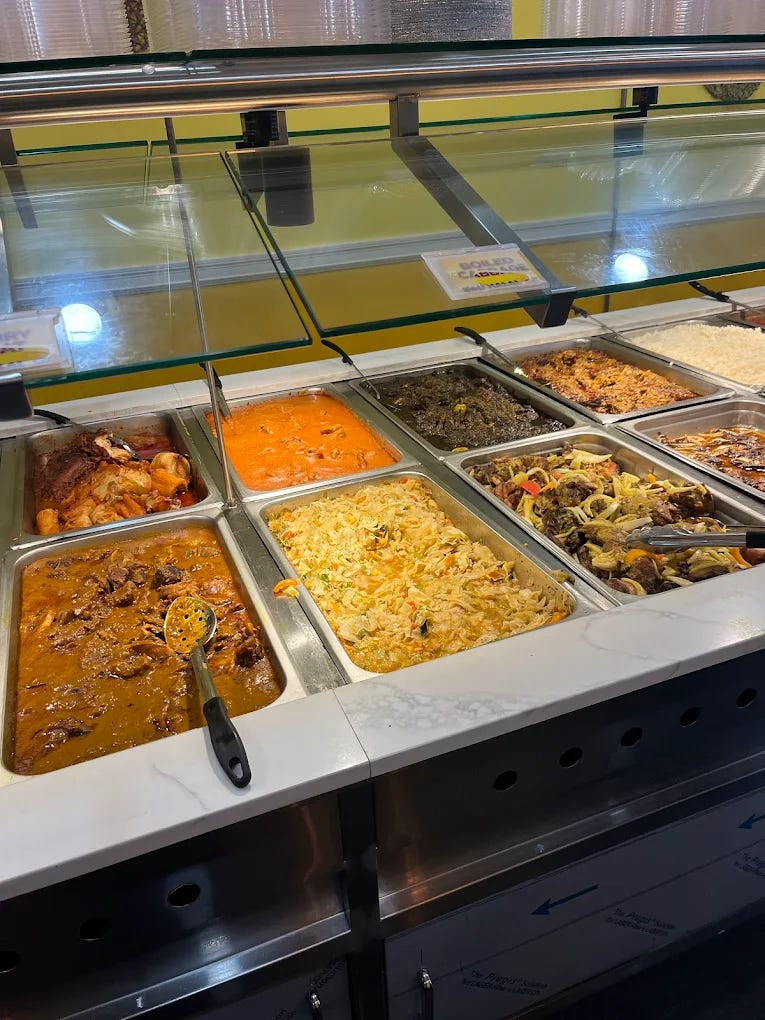
Cow’s feet, beef liver, fufu, cassava leaf sauce, jollof rice, stewed fruits, and cranberry paste.
In my suede overshirt and ultra-casual carpenter jeans, I stood clearly in the 21st century. Across from me lay a rift in spacetime. A sprawling, somatic bazaar of culinary selections.
Call it chicken stew if you want, but these are not just dishes. They are evolutionary champions that have endured the punishing challenge of the vast Mother Continent — each ingredient a survivor — emerging victorious from the brutal history of recent mankind.
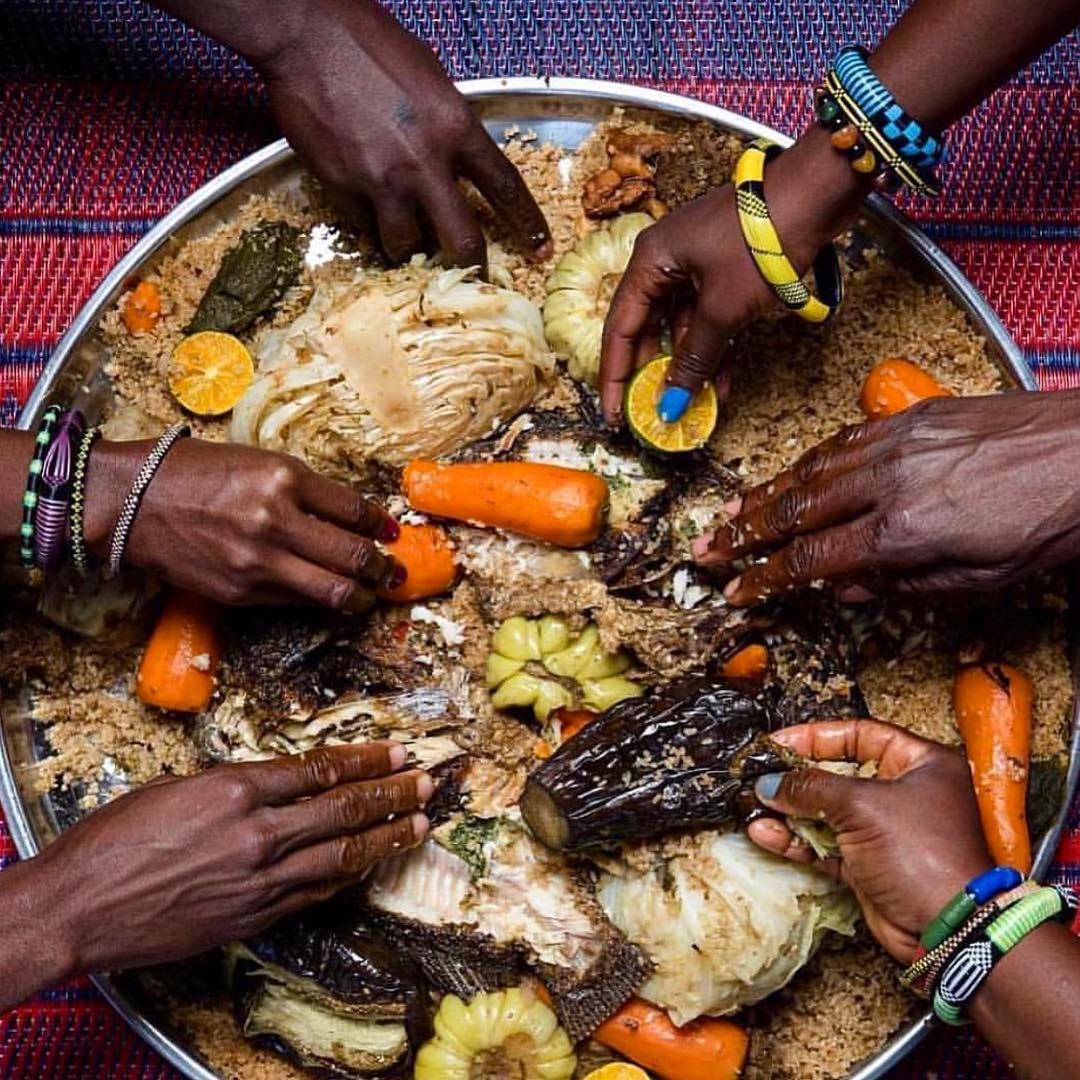
I was in the presence of ancient wisdom and post-modern irony, everything packed into flimsy tin foil trays.
There’s no negotiating when your gut commands you. It knows best and doesn’t lie. Once you become attuned to listening, you’ll realize it isn’t capable of a miss when choosing a meal.
Signals
Ever crave something oddly specific, without knowing why? That’s rarely random. More often, it’s your gut signaling something your body needs.
Take chicken for example. A craving for something this simple isn’t merely about convenience or habit. It often reflects a need for amino acids like glycine, tyrosine, tryptophan, and cysteine — compounds the body uses to repair, recover, and keep you calm.
Having a soup craving? That’s a plea for antioxidants. Even those drunken nights where you’re feral for a greasy beggoneggandcheese means “grab salt, fat, and calories to mop up the damage.”
Now came the time to fuel up. I considered liver, black-eyed peas, and curry goat.
I may have been a vegetarian for the first 25 years of my life, but I’m no stranger to animal products these days. I even went full carnivore for a few months.
Selecting small pieces of each, I shuffled toward the vegetable section. Heaping mounds of cabbage, kale and collard greens. I snagged my share of all three.
The fiber and potassium found in vegetables loosen my muscles, which are typically tender, recovering from sports and hard workouts. My gut didn’t hesitate with that one.
I could hear the choir of notification chirps emanating from the back room, floating atop a sea of overlapping dialects and phone speaker soccer broadcasts.
My plate was still hungry for some carbs.
Yams? I’ll take one, and a bit of mac & cheese, because who can resist a baked, gooey tray of greatness.
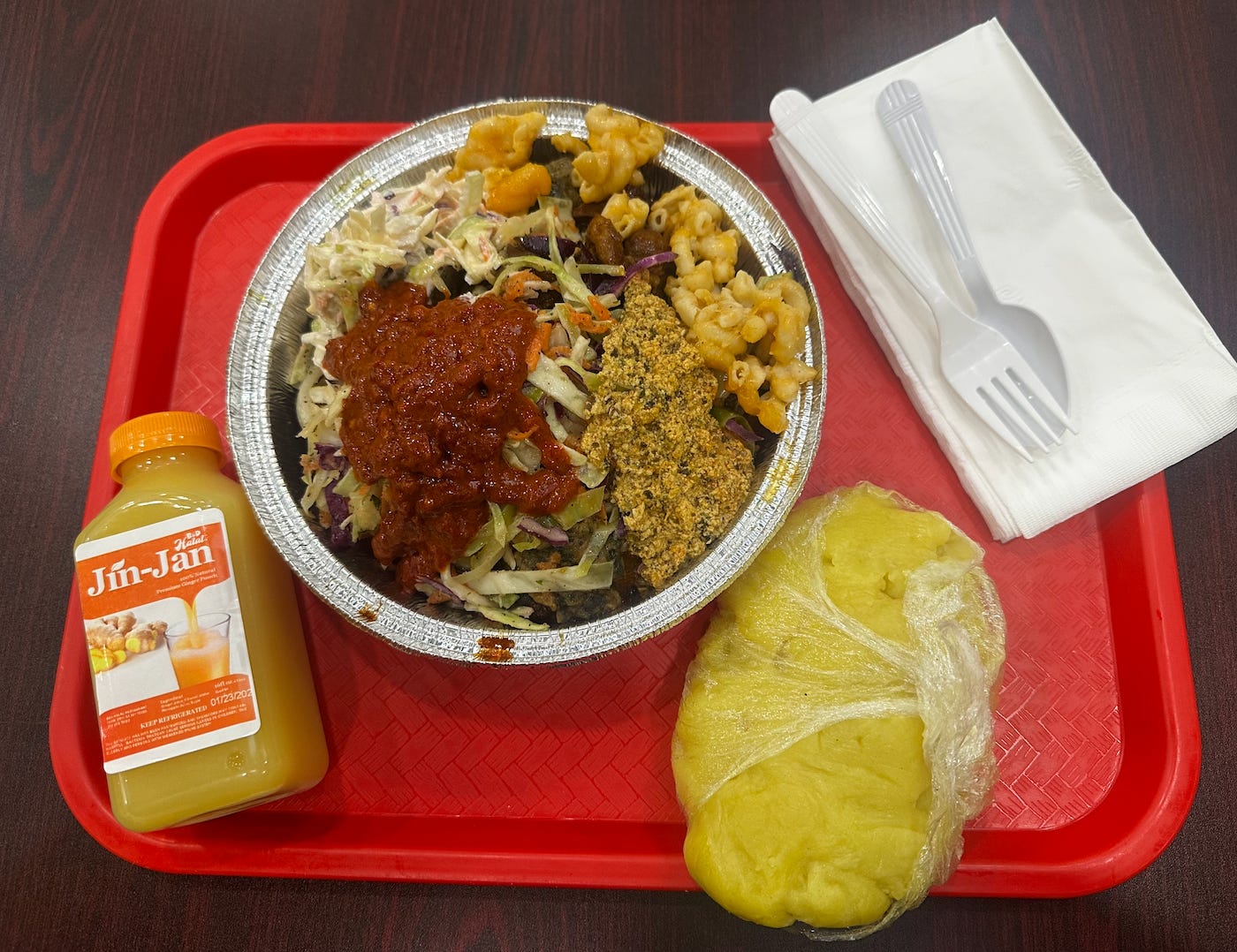
Finally, the king of them all, (in my humble opinion) juicy chunks of oxtail.
There was so much more food to choose from, but I must admit that I hesitated with dishes I was uncertain about, even if they spawned curiosity. My gut knew where to draw the line.
After the young woman in hijab working the register heaved my lunch onto the scale, her eyes bulging at the heaping plate, I started toward the dining room for the main event.
Most of the delivery guys keep their weatherproof equipment on while eating, transforming the cafeteria into what looks like a Fortnite lobby with characters in bike helmets, large black ski gloves, and salt-sprayed rubber boots. And don’t forget the once-loved vintage NFL jackets to complete the avant-garde look.
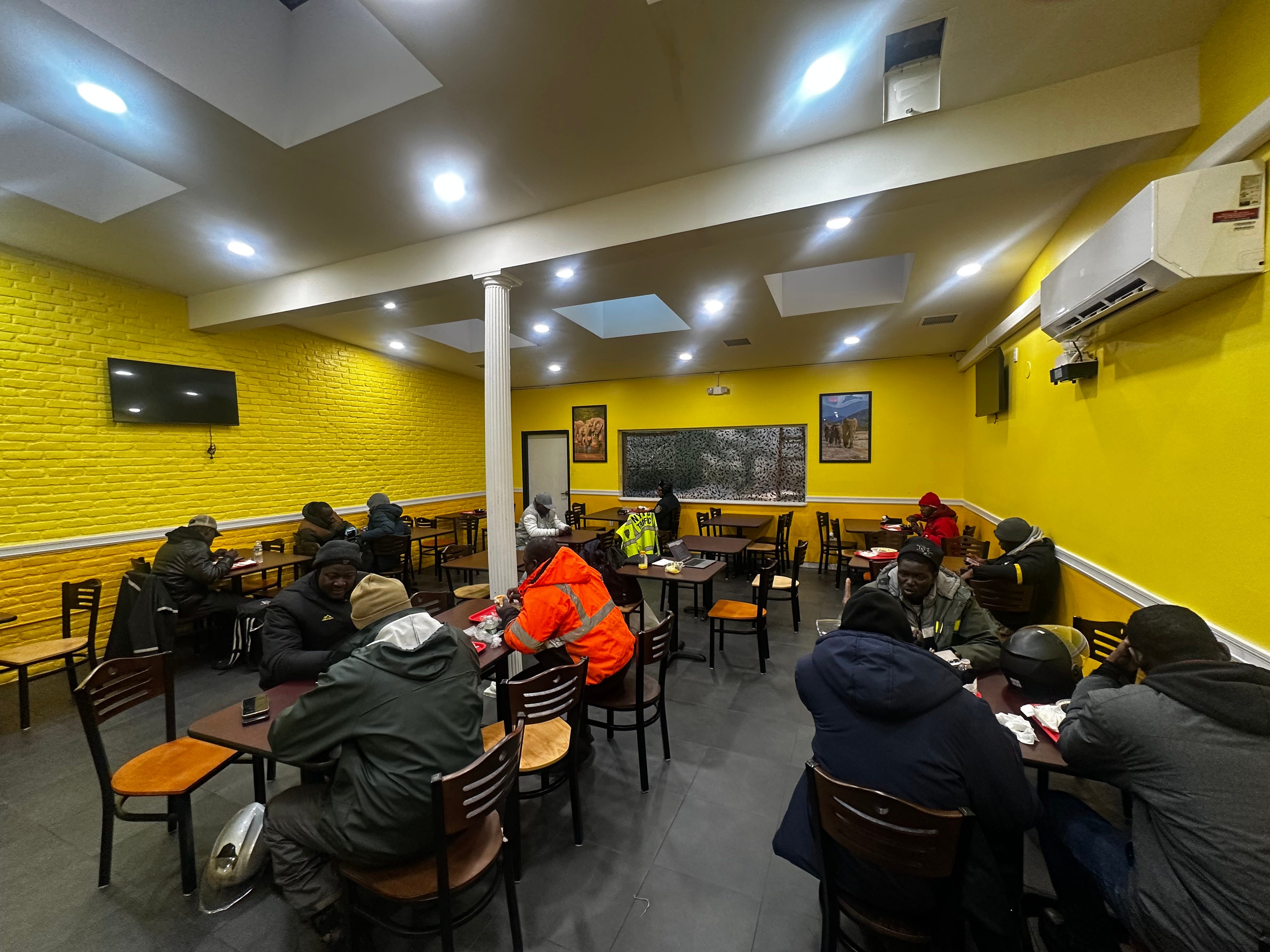
My friends and I have often marveled at how so many of the African dudes working in NYC have a way of making the most absurd outfits look runway ready, even if it’s an assortment of the most eclectic secondhand pieces that no randomizer could possibly assemble.
It’s as if they crash-landed inside an L-Train Vintage, rolled around once and walked out fresh to death.
You can’t hide cool, but these are just the regular patrons.
You can find cooks and busboys greeting guests with a mild manner, quick to smile and say hello. There’s no adoption of NYC’s icy standoffishness over here.
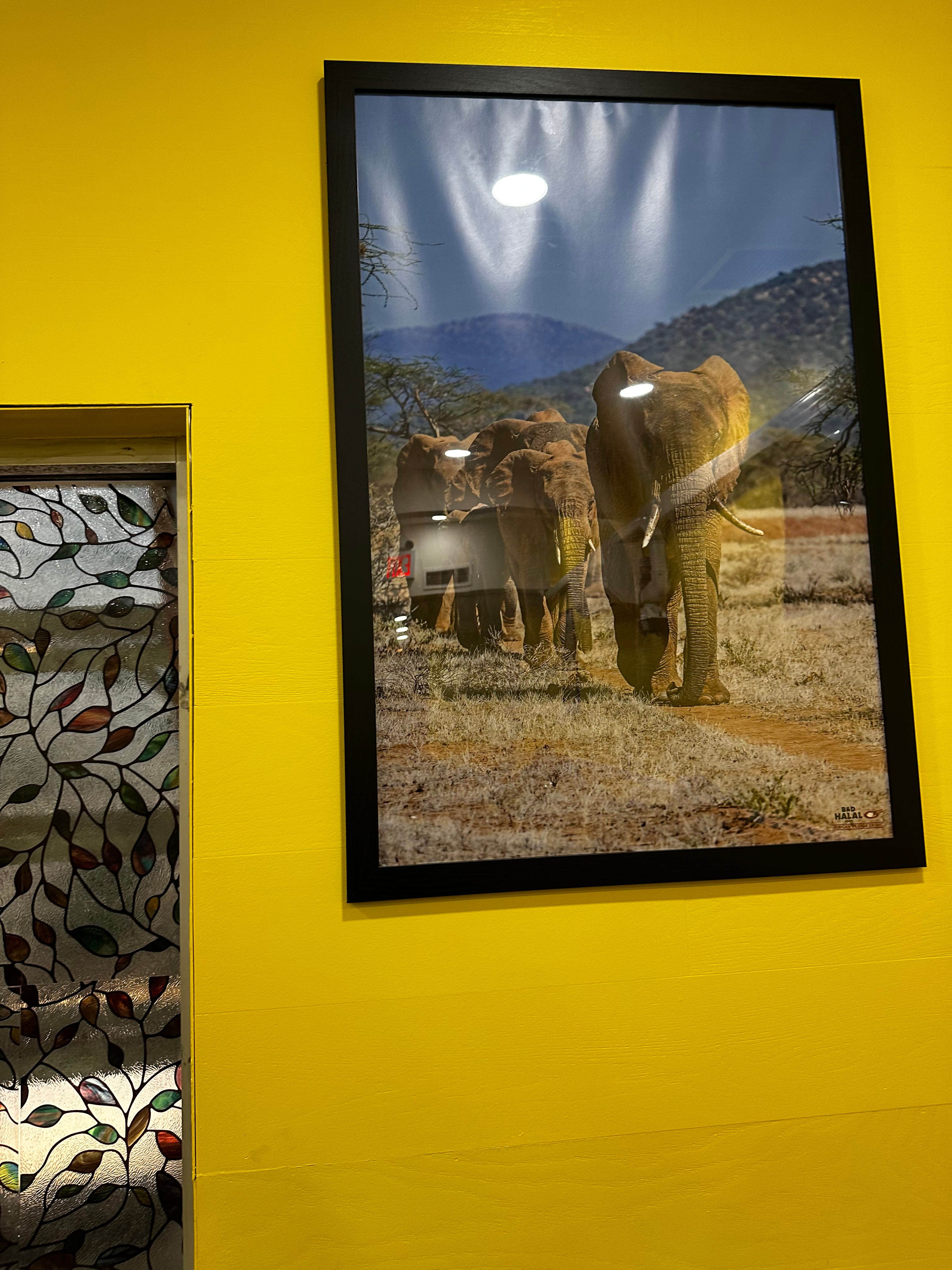
Indifference and boredom might be the standard for the big city’s typical wage worker, but you’re in West Africa once you step into B&D Halal. The framed elephants on the bright yellow walls say so.
No influencer-ish food reviews from me. Though the food genuinely tasted great, something felt different as I began to notice my reactions.
I didn’t feel hasty, anxious or even tense while eating. With the fast-paced lifestyles of NYC and modern living, we often feel pressured to go fast and eat fast.
With processed and calorie-dense foods dominating the market, there’s even more reason that the eating ritual might feel chaotic. But not here. Not with this fuel.
Organize
Beginning with the sensory-rich digestive system which starts in the mouth, it’s as if my body was slowing down to process and analyze what it was receiving. Nutrient-sorting. This is different than flavor identification.
“Hold up,” it halted me. “Let’s take this one bite at a time.” 30 chews before swallowing is the rule of thumb for good digestion.
In real-time, I could feel the slow combinations of amino acids, proteins and nutrients being placed in their respective spots.
“What’s in this piece? Can it be used for the skin?” my gut-brain chattered. “I’ll stick that glycogen in these muscles … and the copper from this beef liver can be stored for later.”

I was washed over with warmth, stability and comfort. My nervous system was being healed with the medicine of food, just how nature intended.
“Any choline left for the nerves?”
The Commons
During the evening dinner rush, when most of the delivery guys are gliding through the avenues, precious Uber Eats and DoorDash meals dangling from their backs, you get a more familiar crowd scooping from the buffet. No, not the frat boy-turned-finance bro and his HR sweetheart.
After 5, you’ll get a glimpse of Manhattan’s more foundational bedrock. Union guys, eager to knock down some jerk chicken and jollof rice, packing up to-go boxes for the ride back to Brownsville.
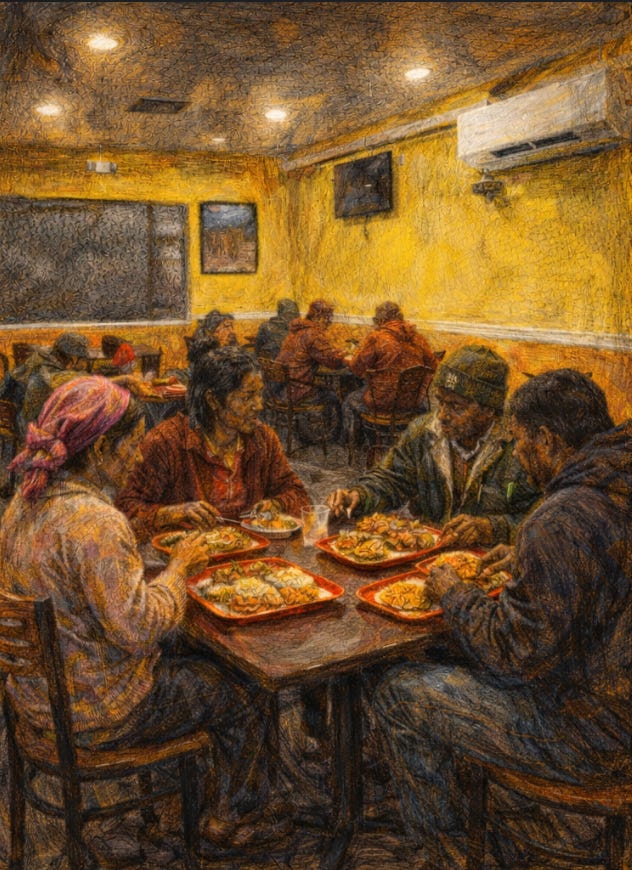
Latina tías, on the verge of abuelita status, (though their firm, upright postures suggest otherwise) munching enough plantains for two. And, perhaps the truest New York bunch of them all, friends of a wide variety of ages and ethnic backgrounds, huddled together over red trays and plastic cutlery.
It’s a stark contrast to the dystopia of lunch-slop-at-your-desk-while-scrolling culture. Food is meant to elevate our physiology and soothe our minds. Not check a box.
More With Less
Since that day, I’ve been focusing on eating what my body is asking for, whether it’s oxtail (collagen, glycine) for my sore joints and winter-wounded skin, or yams for immune restoration and histamine protection.
I’m focusing on how my eating impacts me. Being result-oriented. Researching the origins of these dishes is inspiring me to understand more about different cultures and why they’ve historically eaten what they do.
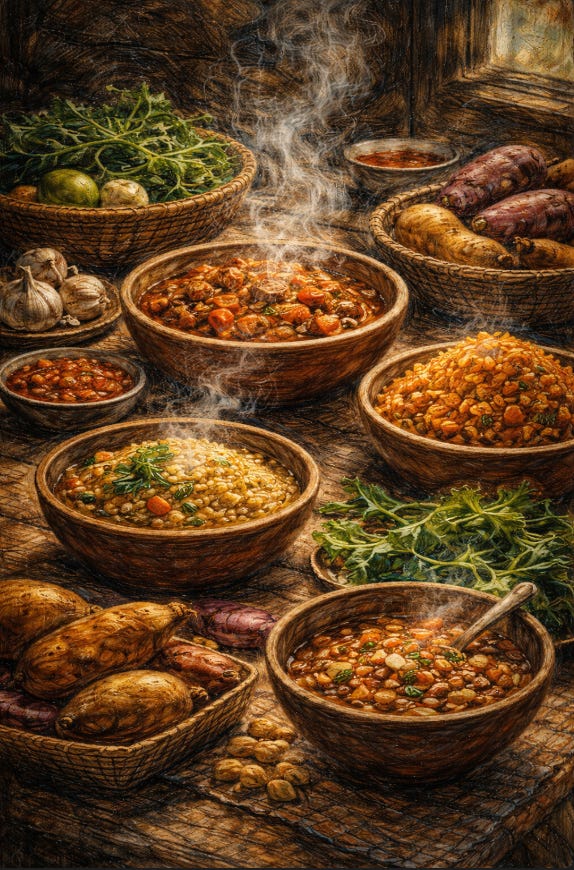
I’m learning about how the billions of minerals inside every bite serve me. I’m learning to feel and sense instead of predict and plan. It’s a listening exercise — a choose-your-weapon approach where the battleground is New York City at the height of an unforgiving winter.
Best of all, I don’t have to read labels or count calories. My gut does the sensing.
Against the hellscape backdrop of feeding chambers with no seating and to-go coffee shops in the city, the glow of this come-one-and-come-all watering hole in Hell’s Kitchen shines bright. It has just enough old-school, homestyle kinship to thaw your soul’s cold heart.
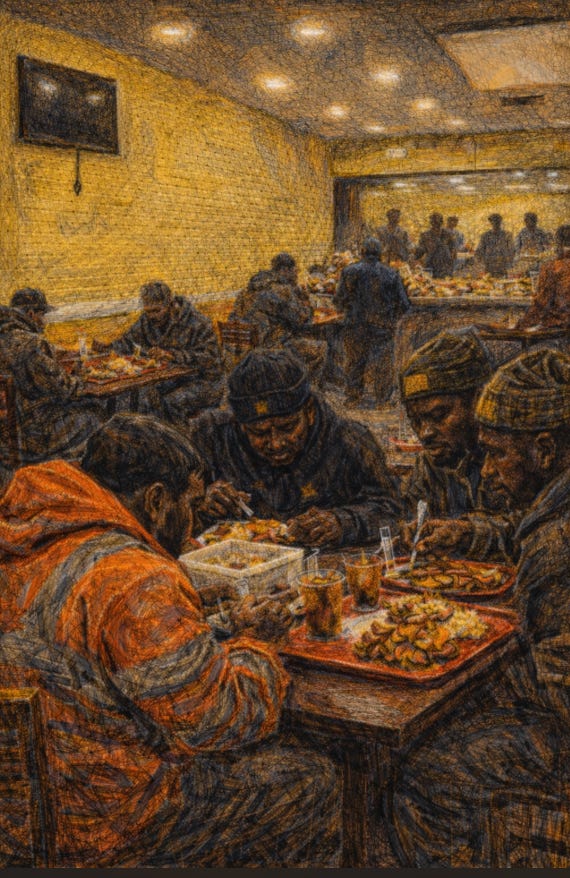
The African dudes are New Yorkers by trade, but they’ve carved a slice of home in the belly of the beast. It must be a pleasure to know that a friend, a lively conversation, or a warm meal that mom would make is always waiting for them every time they step out into the icy wind.
It’s special to see organic community sprout up while New Yorkers seem to be retreating into solitude, or priced out of social spaces entirely.
Ever since my first day eating at B&D, my mind has been telling me that this trend of communal feast is picking up in NYC.
My gut tells me that it’s here to stay.